Alternative Trade Systems in a Crisis: How Trade Works Without a Bank
As of: 29.09.2026
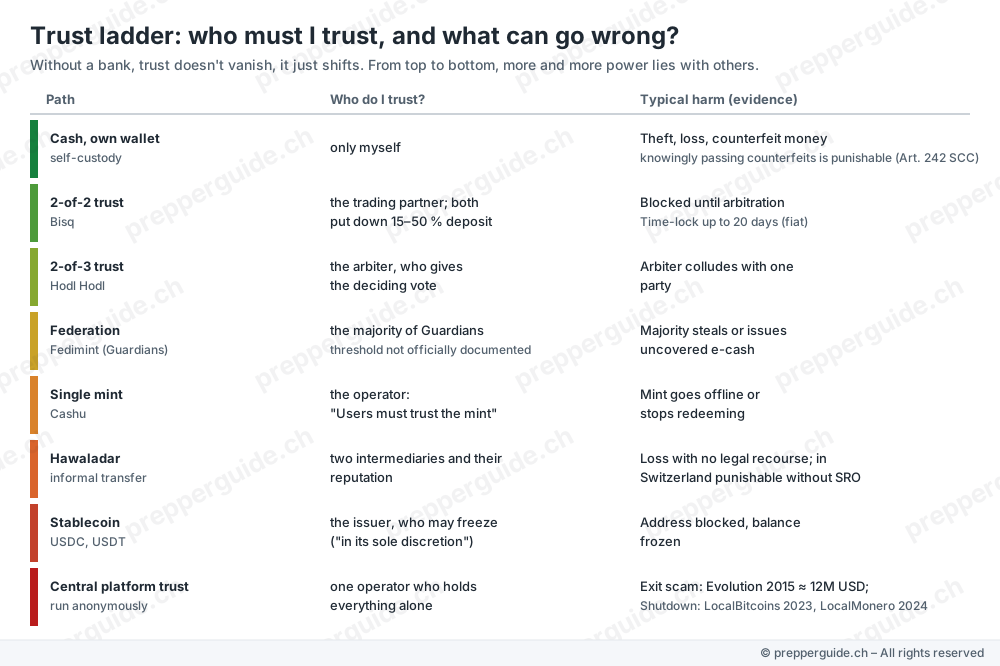
In a supply crisis, the Swiss franc stays valid – so cash in small denominations is the most important fallback system, followed by running a tab with a known merchant. Barter, commodity money, mutual credit (like WIR), exchange circles, vouchers, hawala, escrow and crypto trading between private individuals have all been used in crises. But each of them merely shifts trust: to the merchant, to the community, to a middleman or to a platform. In Switzerland, bartering and offsetting between private individuals is legal; anyone who forwards money or valuables for others needs affiliation with a self-regulatory organisation – hawala without that affiliation is a criminal offence.
What if your card stops working, the ATM is empty, or money loses its value? In such situations, people have always found ways to keep trading: with cash and foreign currency, by running a tab, through barter, cigarettes as money, shared clearing accounts, vouchers, hawala networks or escrow. This article introduces these systems one by one – how they work, where they are documented in real crises, whom you have to trust, and what is legal in Switzerland. It is not investment or legal advice, but preparedness knowledge: those who understand these systems also recognise their pitfalls.
When trading without a bank becomes necessary at all
First, an important distinction. In a supply crisis – such as a long power outage – the Swiss franc keeps its value. What's missing is only the way to use it: card terminals, TWINT and ATMs need power and network. In a currency crisis – hyperinflation or currency collapse – money itself loses its value. The two situations call for completely different responses.
History shows a clear pattern. After disasters such as the 2017 hurricane in Puerto Rico or the 2025 blackout on the Iberian Peninsula, it was not barter that served as the crisis tool, but cash: terminals and ATMs failed, and shops accepted only banknotes. Real barter only emerges once money stops working (hyperinflation) or once there is nothing left to buy. From the Ukrainian town of Oleshky, cut off in 2026, it was reported: "No matter how much money you have, nobody sells anything" – flour, potatoes and tea were only available through barter.
By the way: the textbook story that humanity first bartered and then invented money is not supported by ethnographic evidence. Barter mainly appears when money fails – it is a sign of crisis, not an original state.
System 1: Cash and foreign currency
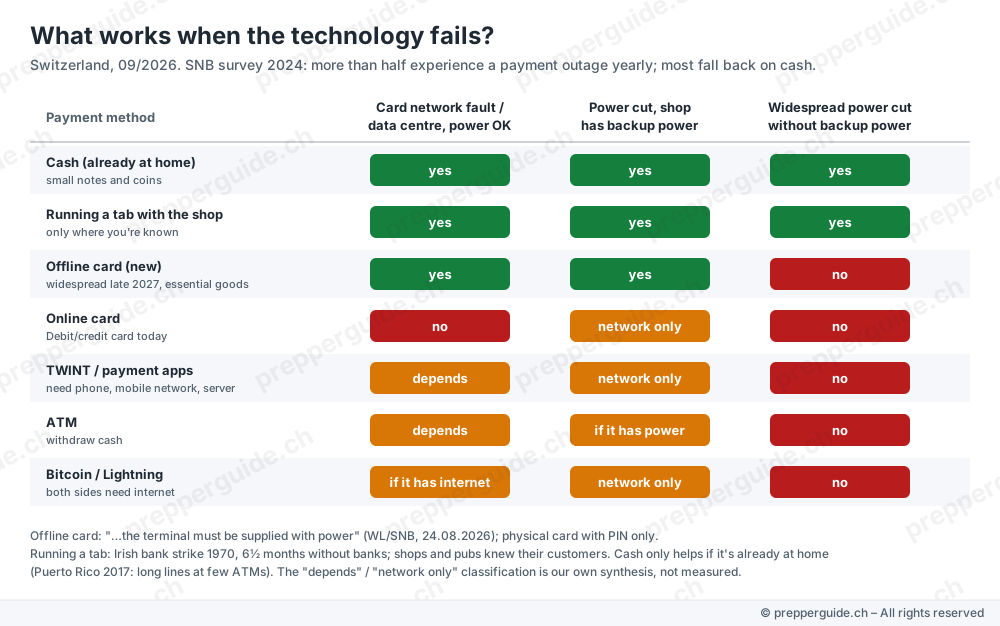
How it works: cash needs neither power nor network nor trust in a bank – only trust in the currency. The Federal Council writes on this: cash payments are in principle always possible, "at least as long as the population has enough cash available." That's exactly where the catch lies: during a widespread power outage, ATMs stop dispensing too.
Crisis evidence: in Lebanon, the dollar cash economy made up around 45.7 % of economic output in 2022, according to the World Bank, after banks restricted access to accounts. In Venezuela and Zimbabwe, the US dollar replaced the national currency. An often-overlooked problem is small change: Ecuador minted its own centavo coins after dollarisation, while in Zimbabwe South African coins served as change.
For Switzerland: the Federal Office for National Economic Supply (FONES) recommends keeping enough cash at home in small notes and coins "so that you can pay for a week's shopping and, if necessary, a tank of fuel in cash." Since the popular vote of 8 March 2026, the Constitution also states that the National Bank guarantees the cash supply. This does not create an obligation for merchants to accept it.
Good for: the most common crisis (power outage, network failure). Limit: cash only helps if it's already at home beforehand – and nobody can change large notes in an actual event.
System 2: Running a tab with the shopkeeper
How it works: the shopkeeper hands over goods today and notes the debt; payment follows later. This is credit based on trust and acquaintance.
Crisis evidence: during the Irish banking strike of 1970, banks stayed closed for six and a half months. The economy kept running anyway: cheques drawn on closed banks circulated like money, and shops and pubs that knew their customers took over the role of banks. In Second World War prisoner-of-war camps too, credit was everyday practice – with a markup: "four cigarettes now or five next week."
For Switzerland: offsetting and deferred payment are regulated in the Code of Obligations (Art. 120 CO) and permitted between private individuals. A Swiss record of an organised tab system in a recent crisis is missing. Good for: short to medium crises within communities where people know each other. Limit: it only works where you are a regular customer.
System 3: Direct barter
How it works: goods for goods, service for service. The catch has been described since 1875 (Jevons): both sides must simultaneously need exactly what the other has – and agree on the value. That is why pure barter stays rare and cumbersome.
Crisis evidence: Germany 1945-1948 ("hamster trips" – household goods, clothing and jewellery for butter, bacon and potatoes), Venezuela 2018/19 (rice, oil or cigarettes for petrol), Argentina 2001/02, occupied areas of Ukraine. Valuables were almost always traded far below their worth.
For Switzerland: barter is a legally regulated contract (Art. 237 CO, the rules of sale apply by analogy). Regular barter income – such as work for goods – is in principle taxable income at market value (Art. 16 DBG). Good for: long, severe crises. Limit: high effort, poor rates for valuables.
System 4: Commodity money – when a good becomes money
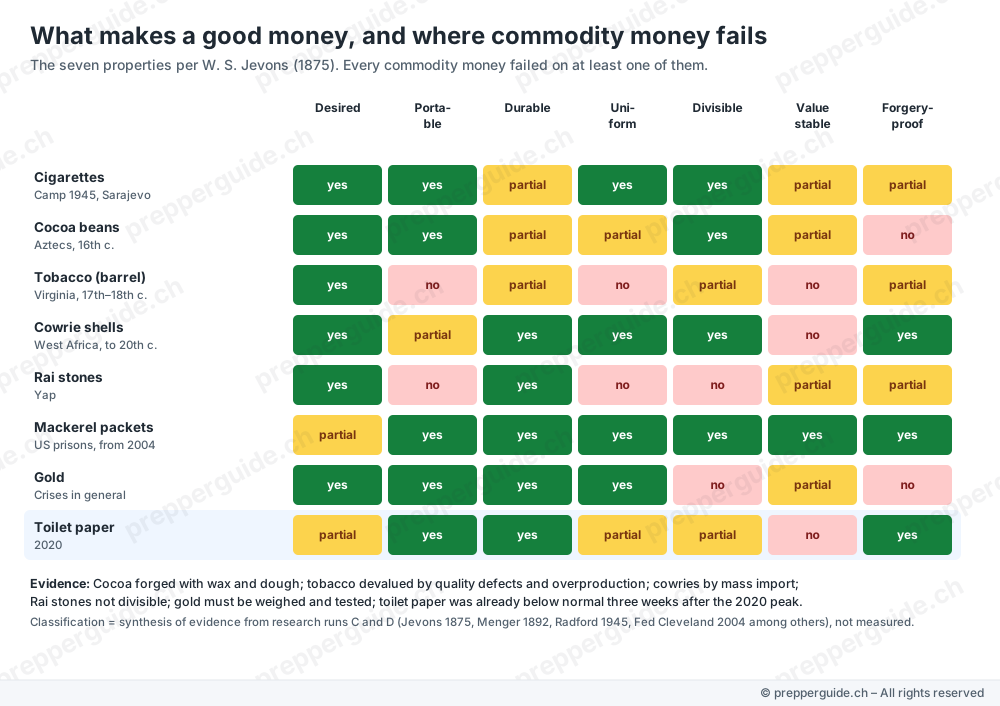
How it works: instead of searching for a matching trading partner every time, people agree on a good that everyone accepts. What's fit to serve as money is desired, transportable, durable, uniform, divisible, stable in value and hard to counterfeit.
Crisis evidence: cigarettes in prisoner-of-war camps (described in 1945 – even non-smokers accepted them as payment), in Germany after 1945 and in besieged Sarajevo; mackerel pouches in US prisons since the 2004 smoking ban; vodka in Russia around 1991; cacao beans among the Aztecs; tobacco in the colony of Virginia. Each of these commodity monies failed on one property: cacao was counterfeited with wax, tobacco devalued by overproduction, cigarettes and vodka get consumed.
Good for: long crises in closed communities. Limit: value fluctuates with supply – once a shipment arrives, prices fall. And: what is briefly scarce in a shop (like toilet paper in 2020) is not thereby commodity money.
System 5: Mutual credit – the WIR principle
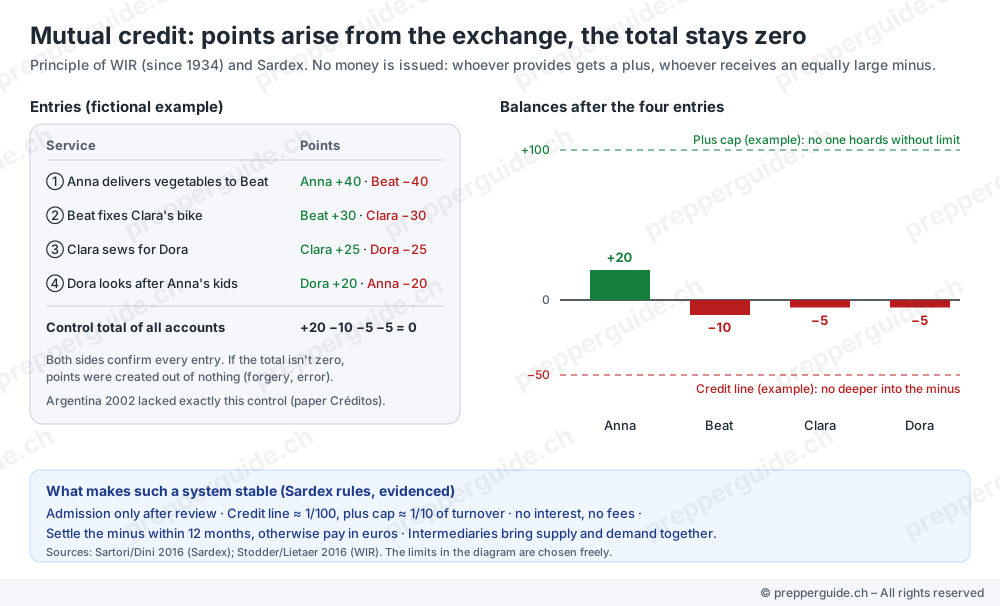
How it works: no money is issued. Whoever provides a service gets a credit on their account, whoever receives one gets an equal debit. The sum of all accounts is always zero. Money is created at purchase and disappears at settlement.
Evidence: the Swiss WIR cooperative arose in 1934 during the global economic crisis and has been subject to the Banking Act since 1936; today it is Bank WIR. Research shows that SMEs use WIR especially during recessions. But its use is shrinking: deposits in the clearing currency fell from around 779 million (2015) to 352 million (2025). The Sardinian system Sardex, by contrast, grew strongly – with clear rules: admission only after review, credit line by turnover, negative balances offset within 12 months, otherwise paid in euros.
For Switzerland: WIR is not legal tender. A debt denominated in WIR cannot be enforced through debt collection (BGE 94 III 74); if an agreed WIR payment fails, the seller may demand francs (BGE 119 II 227). Good for: businesses and communities with ongoing exchange. Limit: without rules for credit lines and admission, what Argentina experienced threatens (see System 7).
System 6: Exchange circles and time banks
How it works: members offset services in their own unit – usually points in exchange circles, hours in time banks. An hour of gardening is worth an hour of childminding.
Evidence from Switzerland: exchange circles like Talent are linked in a network of 26 exchange circles from Switzerland, Austria and southern Germany; time-exchange networks in several cities add to this. St. Gallen's Zeitvorsorge lets volunteers save up hours of elder-care support (up to 750 hours) – the city guarantees later redemption. KISS cooperatives offer no such guarantee.
For Switzerland – to clarify in advance: bartering itself is permitted. Whether an association running a clearing system for many members falls under the Anti-Money Laundering Act is not conclusively settled. FINMA states that a closed circle of users alone does not exempt it; only the simple two-party relationship is excepted. The taxation of time credits is also open. Anyone wanting to found an exchange circle should submit the model beforehand to a self-regulatory organisation or FINMA's fintech desk.
Good for: neighbourhood support and long situations. Limit: almost all of today's platforms run digitally – during a blackout, only what already exists on paper and in relationships helps.
System 7: Vouchers, regional currency and emergency money
How it works: a municipality, association or business network issues notes or electronic credits valid only within its own circle.
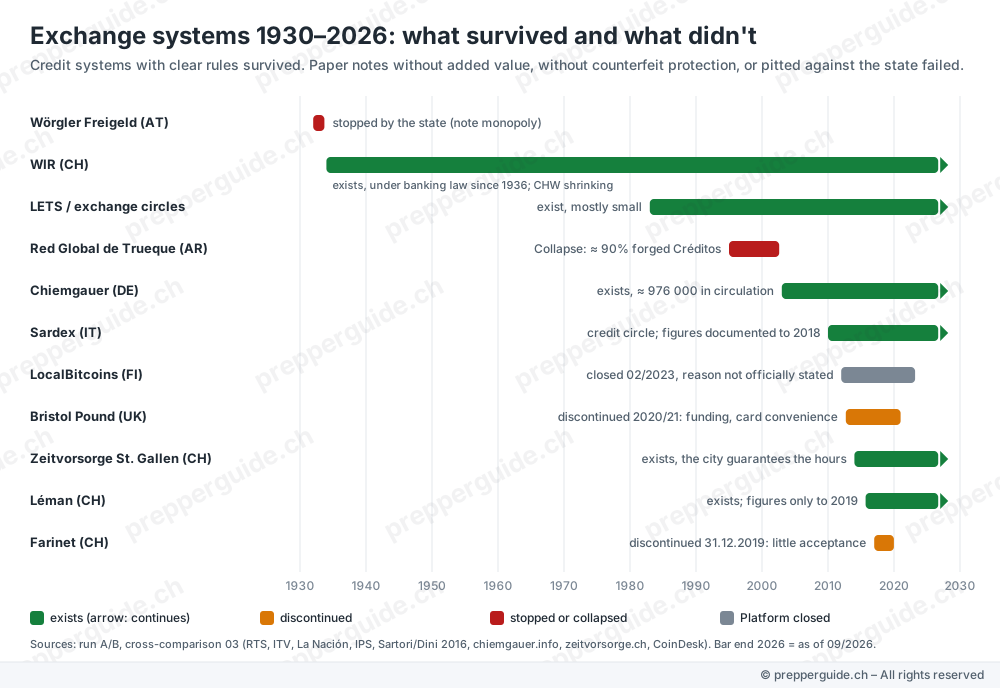
Evidence: Austria's Wörgl issued its own decaying currency in 1932/33 – the national bank had it stopped because of the note-issuing monopoly. In Germany, over 5800 bodies issued emergency money in 1923, from 1922 also denominated in rye, coal or electricity. Valais's Farinet was discontinued at the end of 2019, the Bristol Pound in 2020/21: vouchers pegged 1:1 to the national currency offer little advantage over a card. The Chiemgauer still exists today.
Switzerland itself had a state-run value system alongside the franc: during rationing from 1939 to 1948, the meal coupon was valid without a time limit, divisible down to a quarter, and, according to a Zurich source, "an extremely useful coupon reserve."
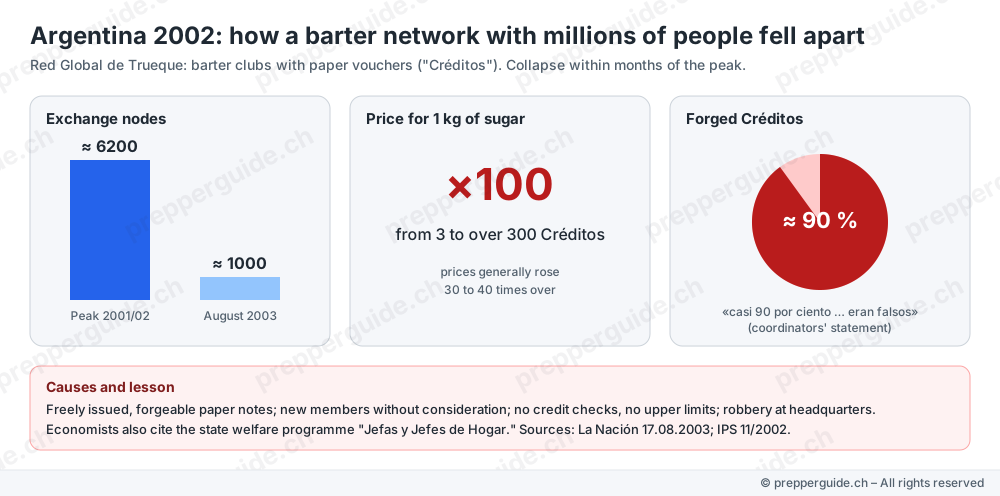
The biggest warning comes from Argentina. The barter clubs of the Red Global de Trueque had millions of members in 2001/02 and paid with paper vouchers, the créditos. Then forgeries flooded the system on a massive scale – almost 90 % according to the coordinators. A kilo of sugar rose from 3 to over 300 créditos, and the network collapsed within months.
For Switzerland: notes must not resemble banknotes closely enough to be mistaken for them (Art. 243 SCC). Anyone issuing vouchers against francs and redeeming them moves into the territory of banking and anti-money-laundering law – to clarify in advance.
System 8: Hawala – value travels, money stays
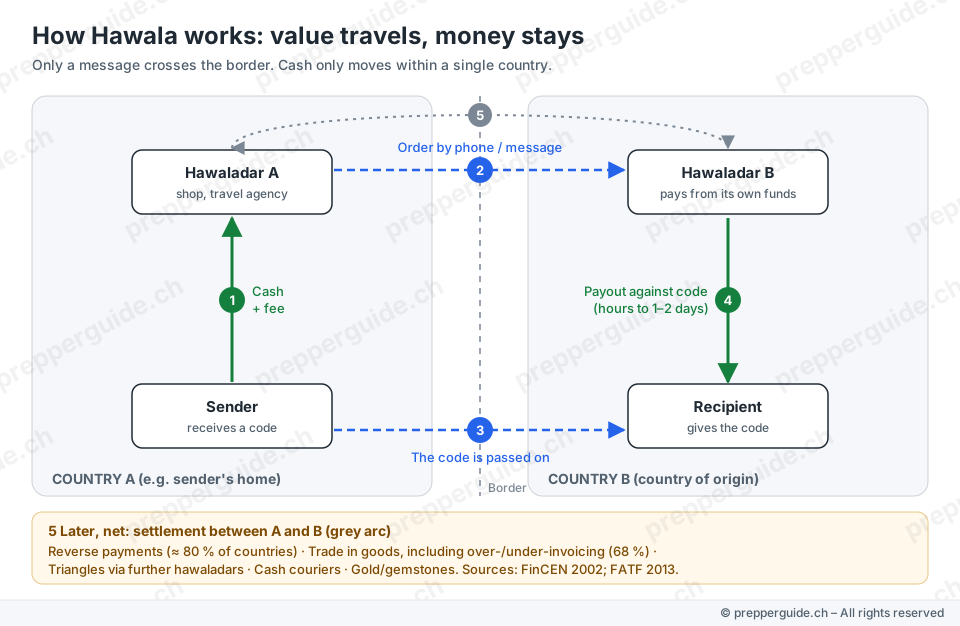
How it works: hawala means "transfer" in Arabic. The sender pays cash to an intermediary, the hawaladar, and receives a code. The hawaladar reports the order to a partner in the destination country, who pays the recipient against the code from their own funds. Only a message crosses the border. The intermediaries settle with each other later – through counter-payments, through triangles with further intermediaries, through trade in goods, or with cash couriers.
Crisis evidence: hawala is fast (hours to a day or two) and in some corridors cheaper than banks. In Afghanistan, after August 2021, official channels were almost completely blocked – according to the World Bank, even aid-organisation salaries ran through hawala. According to the international anti-money-laundering task force FATF, the system is carried less by "trust" than by reputation and precise bookkeeping. But it is also abused for money laundering and terrorist financing, and there is no legal recourse in case of loss.
For Switzerland – punishable without affiliation: anyone who accepts money or valuables for others and has them paid out elsewhere is operating a money- and value-transfer business. This "is always deemed to be carried out on a commercial basis" (Art. 9 AMLO) – the only exception being close relatives up to CHF 50,000 gross proceeds per year. Without affiliation to a self-regulatory organisation, up to three years' imprisonment is threatened (Art. 44 FINMASA). There are Swiss rulings, for instance by the Federal Criminal Court in 2018 for money laundering. For private individuals, hawala is therefore not a preparedness instrument – it is explained here so that one understands how many people worldwide actually send money in crises.
System 9: Escrow – who holds the money until both have delivered?
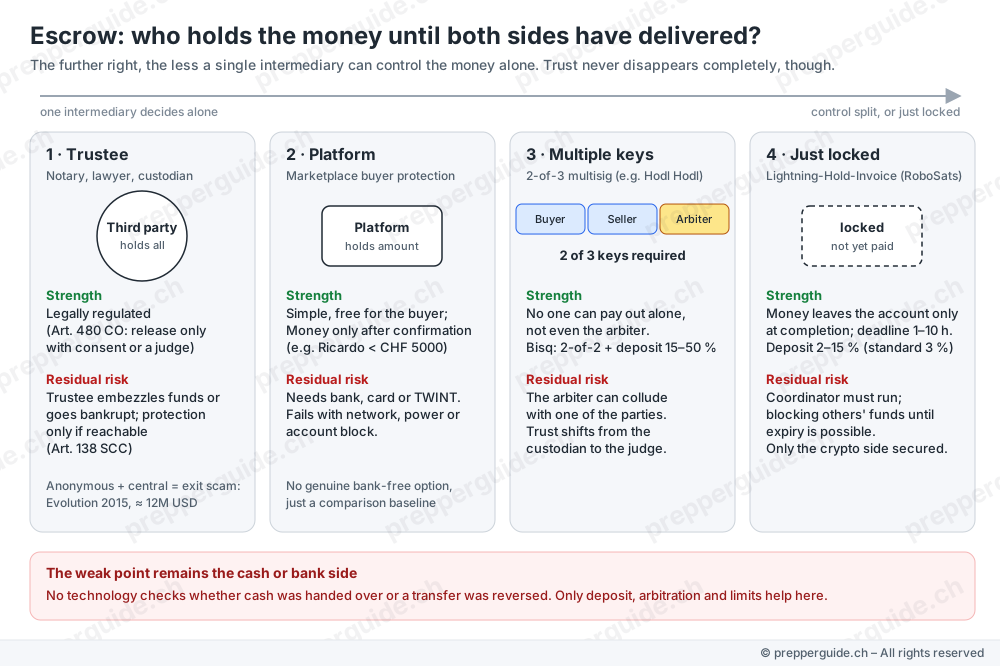
How it works: two strangers want to trade, neither wants to deliver first. A third party holds the payment until both sides have performed. In Swiss law, this corresponds to deposit with a third party, who may only release it with the consent of both, or on order of a court (Art. 480 CO).
Evidence: the biggest losses were caused by the escrow agent itself. The darknet market Evolution disappeared in 2015 with around USD 12 million in escrow funds, Wall Street Market in 2019 with around USD 11 to 14 million. That is why newer platforms rely on multi-signature keys: on Bisq, both trading partners are needed, and both deposit a 15 to 50 % bond. Trust doesn't disappear in the process, it moves from the custodian to the arbitrator. And the cash or bank side can't verify any technology.
For Switzerland: anyone who, as an escrow agent, can dispose of others' assets is, according to FINMA, in principle subject to the Anti-Money Laundering Act. How sensitive this is shows a recent case: the Swiss provider Peach suspended its escrow co-signature at the end of August 2026 following a letter from the regulator.
System 10: Digital routes without a bank
How it works: cryptocurrencies like Bitcoin are transferred without a bank; exchanges between private individuals secure trades with multi-signature keys and bonds. Digital cash like Cashu or Fedimint can be passed on anonymously, but it's a claim against the operators: "Users must trust the mint." Stablecoins are pegged to the dollar – and can be frozen by the issuer at any time.
The limit in a crisis: no digital method allows a final payment without any network at all. Paying by SMS runs through a provider and needs mobile networks, satellites only deliver data, digital tokens can be passed on offline but are only secure after an online check. In a widespread power outage, none of these help.
For Switzerland: anyone transferring or custodying cryptocurrencies for others may be subject to the Anti-Money Laundering Act. In the US, the founders of the Samourai Wallet service were sentenced in 2025 to five and four years in prison respectively – for unlicensed money transmission with knowingly criminal proceeds. Cryptocurrencies are also an investment risk; this is not investment advice.
System 11: Gold and silver
How it works: precious metal is durable, sought-after and tradeable worldwide – a store of value.
Evidence: as an actual means of payment, gold is documented only in Venezuela's gold-mining regions: there, prices are quoted in gram flakes, roughly an eighth of a gram for a haircut, and shops keep scales on the counter. For Germany 1945-48, Argentina 2001 or Sarajevo, no exchange rates of gold for food were found; jewellery was mostly handed over far below its value.
Limits: gold is hard to divide, laypeople can barely verify authenticity, and whoever holds gold attracts extortion. From 1 October 2026, merchants must identify customers already from CHF 15,000 on a cash purchase of precious metal (Art. 8a AMLA). Good for: wealth protection beyond the crisis, not as everyday money during the crisis.
How safe is each system?
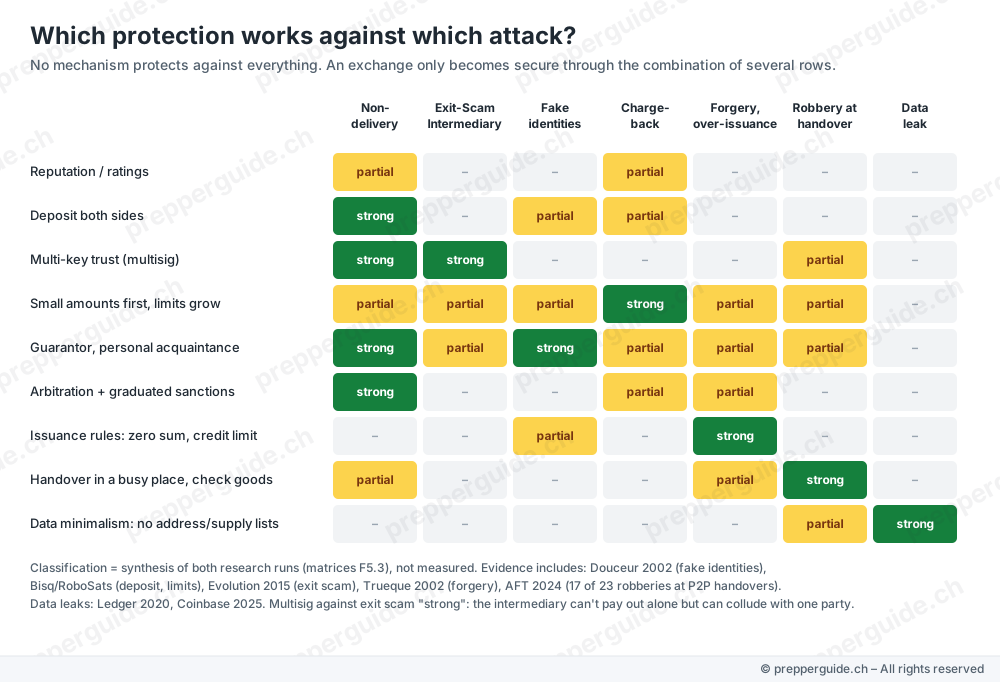
All systems share the same weak points: someone doesn't deliver, the intermediary disappears with the money, fraudsters adopt new identities, payments are charged back, vouchers are forged, handovers end in robbery, or a membership list with addresses falls into the wrong hands.
No single safeguard works against everything. What's effective is a combination: bonds on both sides, small amounts first and limits that grow with experience, personal acquaintance or guarantors, an arbitration body, fixed rules for issuing points – and as little data as possible. Against false identities, there is no complete protection without identity verification; in a neighbourhood, personal acquaintance takes over that role.
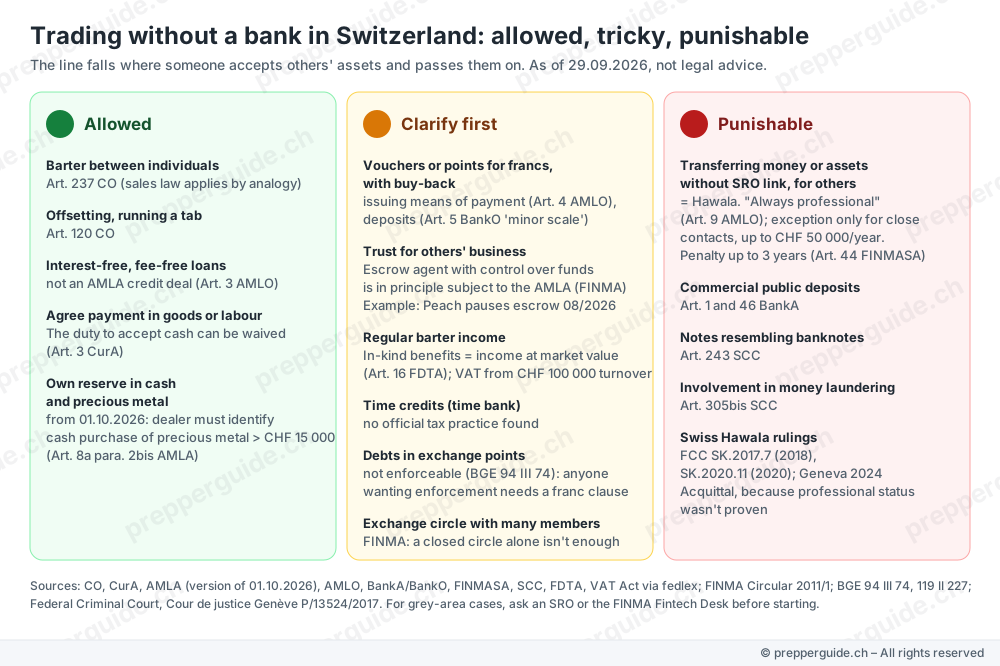
Swiss legal situation at a glance
The line runs where someone accepts others' valuables and passes them on. Bartering, offsetting, running a tab, and interest- and fee-free loans between private individuals are permitted. To clarify beforehand: vouchers against francs, escrow for others, exchange circles with many members, regular barter income and time credits. Punishable are: money and value transfer for others without affiliation, commercial public deposit-taking without a banking licence, banknote-like notes, and any involvement in money laundering.
Important for exchange circles: debts in exchange points cannot be enforced by the state, because debt collection requires an amount in francs. Anyone wanting to claim open negative balances upon a member's departure needs a clear rule in the statutes. This overview is not legal advice.
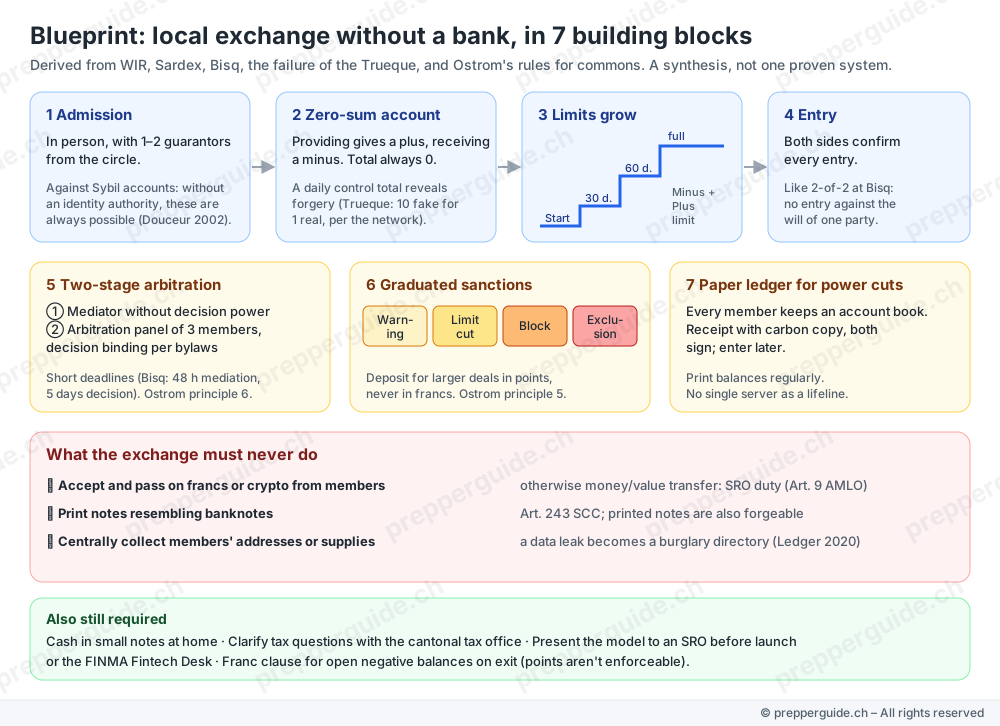
Building a neighbourhood exchange circle
Anyone preparing for long crises builds relationships before they're needed. From the systems that survived (WIR, Sardex, Zeitvorsorge) and Argentina's failure, a blueprint can be derived: accounts instead of paper notes, whose sum is always zero; personal admission with guarantors; small credit lines that grow with experience; every entry confirmed by both sides; two-stage arbitration; graduated sanctions; a paper ledger for the power-outage case.
Three things such a circle should never do: accept francs or cryptocurrencies from members and pass them on, print notes resembling banknotes, or centrally collect members' addresses and stockpiles – such a list would be a burglary directory. And because the legal situation is not conclusively settled: submit the model to a self-regulatory organisation or FINMA before launching.
Common misconceptions
- "Everyone barters in a crisis" – after disasters, cash was almost always the bottleneck, not barter. Barter only comes once money fails or there's nothing left to buy.
- "Hoard toilet paper, it'll become the new currency" – panic goods lose their value as soon as production catches up. Toilet paper sales in 2020 fell below normal three weeks after the peak.
- "Gold is the best crisis money" – gold is a store of value, but hard to divide and hard to verify in everyday life.
- "A closed circle isn't a legal problem" – according to FINMA, limiting membership alone doesn't protect against the Anti-Money Laundering Act.
- "Escrow protects against fraud" – the biggest losses were caused by the escrow agent itself.
- "Digital always works" – without power and network, no digital payment is final.
| System | Needs power/network | Trust in … | Crisis evidence | Swiss law |
|---|---|---|---|---|
| Cash / foreign currency | no | the currency | Puerto Rico 2017, Lebanon from 2019 | permitted |
| Running a tab | no | shopkeeper and customer | Ireland 1970 (banking strike) | permitted (Art. 120 CO) |
| Direct barter | no | the counterparty | Germany 1945-48, Venezuela 2018/19 | permitted (Art. 237 CO); watch taxation |
| Commodity money | no | the community | Cigarettes 1945, Sarajevo 1992-96 | permitted (no prohibited goods) |
| Mutual credit | depends on system | the community / Bank WIR | WIR since 1934, Sardex | WIR subject to Banking Act; debts not enforceable |
| Exchange circle / time bank | depends on system | the association / guarantor | St. Gallen Zeitvorsorge | clarify beforehand (AMLA, tax) |
| Vouchers / regional currency | no (paper) | the issuer | Wörgl 1932, Argentina 2002 | clarify beforehand; no banknote-like notes |
| Hawala | phone/message | two intermediaries | Afghanistan from 2021 | punishable without SRO affiliation |
| Escrow | depends on form | escrow agent / arbitrator | Exit scams 2015, 2019 | for third parties, in principle AMLA |
| Crypto between private individuals | yes | platform, arbitrator | no broad crisis evidence found | transfer for third parties: AMLA possible |
| Gold / silver | no | authenticity, weight | Venezuela (mining regions) | permitted; merchant identification from CHF 15,000 cash |
Research conducted with two independent runs and cross-comparison, key claims verified against primary sources (as of 29.09.2026). Not investment or legal advice.
Frequently asked questions
Which alternative trade systems work in a crisis?
In a supply crisis, the Swiss franc stays valid – so cash in small denominations is the most important fallback system, followed by running a tab with a known merchant. Barter, commodity money, mutual credit (like WIR), exchange circles, vouchers, hawala, escrow and crypto trading between private individuals have all been used in crises. But each of them merely shifts trust: to the merchant, to the community, to a middleman or to a platform. In Switzerland, bartering and offsetting between private individuals is legal; anyone who forwards money or valuables for others needs affiliation with a self-regulatory organisation – hawala without that affiliation is a criminal offence.
How does hawala work?
The sender pays cash to an intermediary (hawaladar) and receives a code. The intermediary informs a partner in the destination country, who pays the recipient against the code from their own funds. Only a message crosses the border; the intermediaries settle with each other later, for instance through counter-payments or trade in goods.
Is hawala legal in Switzerland?
Only with affiliation to a self-regulatory organisation. Anyone who accepts money or valuables for others and has them paid out elsewhere is operating a money- and value-transfer business, which "is always deemed to be carried out on a commercial basis" (Art. 9 AMLO). Without affiliation, up to three years' imprisonment is threatened (Art. 44 FINMASA). Only close relatives are exempt, up to CHF 50,000 gross proceeds per year.
What is WIR money?
WIR is a clearing currency of Bank WIR, formed in 1934 as a cooperative of small and medium-sized enterprises. Members offset services with each other, at favourable rates and without francs. WIR is not legal tender; a WIR debt cannot be enforced through debt collection.
May I found an exchange circle in Switzerland?
Bartering and offsetting between private individuals is permitted. Whether an association running a clearing system for many members falls under the Anti-Money Laundering Act is not conclusively settled – FINMA states that a closed circle of users alone does not exempt it. So: don't accept or pass on francs, and submit the model to a self-regulatory organisation or FINMA before launching.
What was actually used as money in crises?
Documented above all are cigarettes (prisoner-of-war camps, Germany after 1945, Sarajevo), foreign currency such as the US dollar (Lebanon, Venezuela, Zimbabwe), mackerel pouches and ramen in prisons, and in the past tobacco, cacao, salt and cowrie shells. What always mattered: durable, uniform, divisible and desired by almost everyone.
Does Bitcoin work during a power outage?
No, not reliably. Both sides need power and a network connection; digital tokens passed on offline are only secure after an online check. During a widespread power outage, cash in small notes helps.
How much cash should I keep at home for a crisis?
FONES recommends keeping enough cash in small notes and coins so you can pay for a week's shopping and, if necessary, a tank of fuel in cash. Nobody can change large notes in an actual event.
Further links
- Finance: Valuables in Crisis What becomes scarce and when – and why toilet paper suddenly ran out in 2020
- Finance: Bank Crisis & Deposit Insurance How safe your money really is at the bank
- Finance: Inflation & Purchasing-Power Loss When money itself loses value
- Guide: Setting up cash reserve Preparing the most important fallback system
- Guide: Gold and precious metals as crisis reserve Physical precious metals put soberly into context
- Guide: Setting up emergency supplies So you don't have to trade at all in a crisis
- Scenario: Payment system failure When card and TWINT stop working
Sources
- FATF: The Role of Hawala and Other Similar Service Providers in Money Laundering and Terrorist Financing (2013-10-01) Original source
- FinCEN (US Treasury): A Report to the Congress in Accordance with Section 359 of the USA PATRIOT Act (informelle Wertübertragungssysteme, Hawala) (2002-11-22) Original source
- Bundesrat (fedlex): Geldwäschereiverordnung (GwV, SR 955.01) – Art. 4 Geld- und Wertübertragung, Art. 9 «immer berufsmässig» (2023-01-01) Original source
- Bundesversammlung (fedlex): Geldwäschereigesetz (GwG, SR 955.0), Fassung ab 1. Oktober 2026 – Art. 2, 8a, 14 (2026-10-01) Original source
- FINMA: Rundschreiben 2011/1 «Tätigkeit als Finanzintermediär nach GwG» (Escrow, Closed-Loop-Systeme) (2017-01-01) Original source
- Bundesstrafgericht: Urteil SK.2017.7 vom 29. März 2018 (Hawala, qualifizierte Geldwäscherei) (2018-03-29) Original source
- Bundesgericht: BGE 94 III 74 (Betreibung nur für Forderungen in Schweizer Währung, WIR-Checks) (1968-10-10) Original source
- Bundesgericht: BGE 119 II 227 (vereinbarte WIR-Zahlung zahlungshalber, Anspruch auf Barzahlung) (1993-05-25) Original source
- Bundesamt für wirtschaftliche Landesversorgung (BWL): Kluger Rat – Notvorrat (Broschüre: Wasser, Bargeld für Wocheneinkauf und Tankfüllung) (2025-02-17) Original source
- Bundesrat: Die Akzeptanz von Bargeld in der Schweiz (Bericht in Erfüllung des Postulats 18.4399) (2022-12-09) Original source
- Wirtschaftliche Landesversorgung / SNB: Offline-Kartenzahlungen für lebenswichtige Güter (Medienmitteilung) (2026-08-24) Original source
- Schweizerische Nationalbank (SNB): Zahlungsmittelumfrage bei Privatpersonen 2024 (2025-05-01) Original source
- Bundesversammlung (fedlex): Schweizerisches Strafgesetzbuch – Art. 157 Wucher, Art. 242/243 Geld und Banknoten (2026-06-12) Original source
-
R. A. Radford, Economica 12(48):
The Economic Organisation of a P.O.W. Camp
(1945-11-01)
The cigarette became the standard of value … everyone, including non-smokers, was willing to sell for cigarettes.
Original source Archive -
C. Humphrey, Man 20(1):
Barter and Economic Disintegration
(1985-03-01)
No example of a barter economy, pure and simple, has ever been described, let alone the emergence from it of money.
Original source Archive -
Sartori & Dini, Stato e Mercato 36(2):
From complementary currency to institution: a micro-macro study of the Sardex mutual credit system
(2016-08-01)
Credit lines are set in relation to turnover; negative balances must be offset through sales within twelve months, otherwise repaid in euros.
Original source Archive -
Stodder & Lietaer, Comparative Economic Studies 58(4):
The Macro-Stability of Swiss WIR-Bank Credits
(2016-12-01)
WIR turnover moves counter-cyclically: firms use it more in recessions.
Original source Archive -
La Nación:
La hiper le ganó la pulseada al trueque
(2003-08-17)
De los 6200 centros de intercambio … sólo sobreviven unos mil; un kilo de azúcar pasó de costar 3 créditos a más de 300.
Original source Archive - Mervyn King, Bank of England: The Institutions of Monetary Policy (Ely Lecture, «Swiss Dinar» im Nordirak) (2004-01-04) Original source
- Weltbank: Lebanon Economic Monitor: Normalization of Crisis Is No Road to Stabilization (2023-05-16) Original source
-
Peach Bitcoin (Blog):
Peach at a Crossroads (Escrow pausiert)
(2026-08-31)
Peach won't have a signature in the escrow anymore; the seller fully controls the escrowed BTC.
Original source Archive -
Bisq Wiki:
Security deposit (Kaution 15–50 % je Seite)
(2026-09-29)
Both traders deposit a security deposit of at least 15 % and at most 50 % of the trade amount.
Original source Archive - Federal Reserve Bank of Cleveland: Island Money (Steingeld Rai auf Yap) (2004-02-01) Original source